

What SEO Metrics Drive Revenue Growth
SEO has been considered a tool for increasing organic traffic forever. But as we approach 2026, there have been lots of changes in the SEO metrics and what they mean to businesses. Instead of focusing simply on traffic or rankings, companies are focusing more on ROI and revenue growth because it’s a no-brainer that your rankings won’t matter if you’re not getting any conversions.
In this guide, we’ll talk about the key SEO metrics for revenue in 2026 and how you can align your SEO strategy with your business goals.
The 3 Key Layers of SEO Performance Measurement
To understand how SEO efforts affect your revenue, you need to look at SEO metrics across three core layers, including visibility, engagement, and business impact.
Visibility Metrics: Top Funnel
Visibility metrics are the most important when you want your audience to get to know you. These metrics help you track how well your website is being seen by your target audience. These metrics are:
Keyword rankings by search intent: When you track keywords by search intent, you can better align your content with what your users need. Try to focus on high conversion keywords for transactional searches like ‘buy mattresses online’, and for commercial queries, try using more specific keywords like ‘best medical mattresses for back pain.’
Online CTR: The Click Through Rate is the best indicator of how well your content is performing in the SERPs. A couple of research studies have shown that the top ranker on Google gets about 31.7% clicks. Therefore, you must optimize your title tags and meta descriptions for higher CTR.
Share of Voice vs Competitors: Keep tracking your competitors and study your gaps in organic search visibility. You can use Ahrefs or Semrush to measure your share of voice relative to your competitors.
Best Tools to Track Visibility Metrics
- Ahrefs
- SEMrush
- Google Search Console
Engagement Metrics: Mid Funnel
Engagement metrics tell you how your audience is interacting with your site. You can track everything from how long they stay on your page, if they browse more pages, or are they convert, etc.
Time on Site/Pages Visited Per Session: If your users are staying on your site for a longer duration and are browsing multiple pages, it sends strong signals to search engines that your website is relevant to users. Use Google Analytics 4 to track these metrics.
Bounce Rate: If your site has a higher bounce rate, it’s a clear signal that your content is irrelevant or not good enough to keep the users engaged. You can reduce your bounce rate by improving content quality and aligning it with user search intent.
Repeat Visits: Nothing beats returning visitors because it shows they like your content and are loyal to your brand. Repeat visits are a very powerful engagement metric that indicates to search engines that users trust your content.
Best Tools to Track Engagement Metrics
Business Impact Metrics: Bottom Funnel
The most important metrics to keep an eye on are those that directly impact your business.
Organic-Assisted Conversion: These metrics help you track how organic traffic is performing in the sales funnel, even if the final conversion happens through paid or direct channels. You can track those conversions through CRM tools like HubSpot or Salesforce.
Direct Sales from Organic Reach: Be more specific to measure how much of your sales is coming directly from the organic Search. Only by measuring this metric will you see how well your SEO efforts are paying off.
ROI per Keyword Cluster: Track the cost per acquisition (CPA) for each keyword cluster, compared to the other channels. This shows which keywords are the most profitable for your business.
Best Tools to Track Business Impact Metrics
- Google Analytics 4 (GA4)
- Hub Spot
- Salesforce
- Google Ads
What SEO Metrics Matter the Most for Revenue in 2026?
Now that we’ve gone through the key layers, let’s find out the best SEO metrics that drive revenue in 2026.
Organic Traffic Quality Over Quantity
Getting traffic to your website is not enough unless you have the right traffic with high intent. Try to focus on three types of search queries for intent driven SEO:
Transactional Keywords: These are searches with high conversion potential. E.g: ‘buy mattresses online.’
Commercial Keywords: These are searches that indicate strong purchase intent, but users may still be comparing options. E.g: ‘best medical mattresses for back pain.
Informational Keywords: These searches have the lowest conversion potential, but they still drive traffic to your site. E.g: ‘how to choose mattresses 2026.’
Core Web Vitals and Their Role in Revenue Growth
Google’s Core Web Vitals, including LCP, FID, and CLS, are now the official ranking factors of websites. They also play a very important role in the conversion rates. Some research shows that 15-20% higher conversions are possible if your website passes the Core Web Vitals test.
The best tools to improve core web vitals are Google PageSpeed Insights, Lighthouse, and GTmetrix.
For example:
- Disney has improved its page load times, resulting in a 25% increase in their engagement and around 15% higher conversion rates.
- NDTV has reduced its bounce rate by 50% after halving LCP, along with other product changes.
Branded Search and Trust Metrics
Branded Search is another important metric for tracking the impact of your brand recognition. As your brand grows, so too will your branded Search and that impacts conversions. You can use tools like Google Trends and Google Search Console to monitor branded search growth. For example, Nike has improved its E-A-T (Expertise, Authoritativeness, and Trustworthiness) signals for better visibility in Search and improved conversion rates.
Best Tools to Track Branded Search
Google Search Console is the best tool to track branded search growth, while Ahrefs and SEMrush are great for measuring the impact of E-A-T signals.
How To Implement an Actionable SEO Measurement System
An actionable SEO measurement system is the key to turning your SEO data into real business growth. To make this system, you need to integrate all your SEO metrics into a unified dashboard that aligns with your revenue goals.
Unified SEO & Revenue Dashboards
Connecting your SEO performance and business performance is the key to understanding the full extent of the success of your SEO efforts. Start by creating a dashboard that connects your SEO metrics with the conversion data. With the information available to you, you can see the connection between the organic traffic and the different levels of the sales funnel to revenue generation.
Having a unified SEO dashboard allows for the correlation of traffic, engagement, and conversion to your business. With that, the business is able to make informed decisions that drive profitability. Fully customizable reports that span the entire customer journey can be created with tools like GA4 and Looker Studio.
Event Tracking and Micro-Conversions
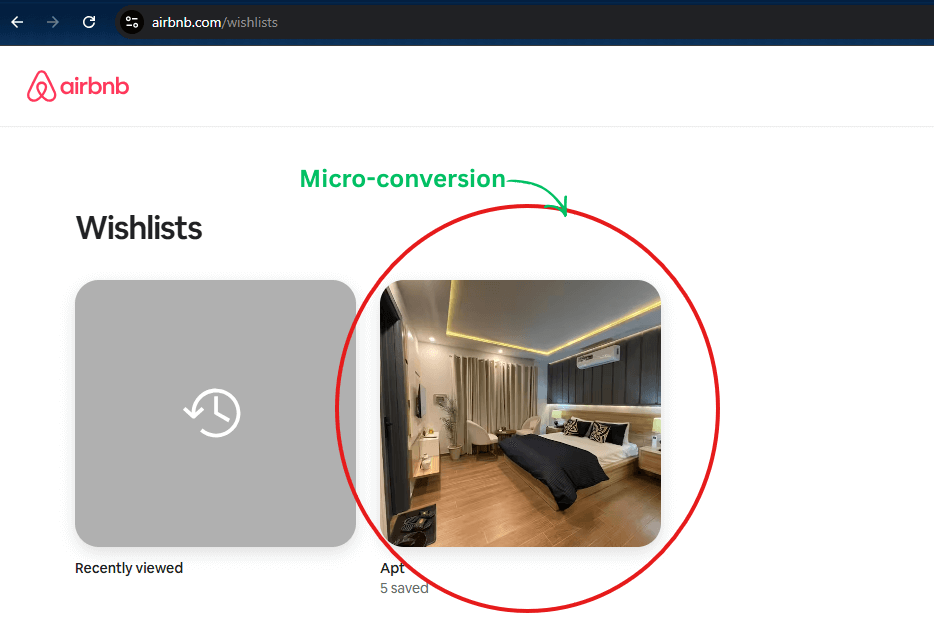
Most brands think that it’s enough if their audience fills out the forms. However, form submissions don’t mean conversions. Track all the micro conversions like demo requests, add to carts, or email sign-ups, since these insights help you understand your user interest. Once you know what your users are interested in, you can retarget your users more effectively.
Airbnb is one of those brands that tracks all micro conversions like wishlist additions and retargets users with personalized ads to improve the conversion rates by around 18%.
Tools
Google Tag Manager is the best tool to set up event tracking, while Google Analytics can be used for tracking those micro conversions that you may be overlooking.
The ROI of SEO
SEO strategy doesn’t only mean to improve your rankings on the search engine results pages. You’re investing to get known and reach your ideal audience. Ultimately, all your SEO efforts should lead to only one goal, and that is conversion and revenue generation. Since the concepts of data-driven decision-making and financial accountability are rising in the business market, executives are expecting to justify their investment in SEO with clear business outcomes.
Here’s how you can improve the overall ROI and justify your SEO spend with metrics that bring results.
Converting Technical Wins into Business Value
Don’t simply focus on technical wins; start converting them into your business growth. Core web vitals are a focus of search engines now. Site speed optimization, mobile-friendly designs, and overall user experience are now essential for turning your traffic into leads and sales. The concept is straightforward.
We all love the sites that load faster and provide a flawless mobile experience. Ease is one of the biggest influencing factors in the conversion of users into loyal customers or visitors. Wix is a great example. Since it worked on mobile optimization and focused on improving site loading speed, Wix saw a 15%increment in the conversion rate. You can receive similar results by improving your technical metrics by using tools like GTmetrix, Google PageSpeed Insights, and Pingdom.
Justifying SEO Spend to Executives
SEO is evolving each day, and therefore, CEOs, CMOs, and VPs of Sales have stopped focusing on vanity metrics like traffic volume or keyword rankings. They need a more solid result in the form of a return on investment. To secure your budget, you need to demonstrate the SEO’s impact on revenue, lead generation, and sales.
Focus on organic-assisted conversions and ROI per keyword cluster metrics that we have discussed above. They can help you measure the SEO performance leading to revenue generation. Besides these metrics, if you show the improvements in conversion rate, CAC (Customer Acquisition Costs), and AOV (Average Order Values), they can also demonstrate how well your SEO efforts are impacting your business growth.
Fixing Underperforming Pages and Identifying Zombie Pages
Zombie pages are those pages that are ranking well in search engines but are not converting any visitors into leads or customers. These pages do get you the organic traffic, but are they fulfilling your business goals? Most probably not!
Zombie pages have the following characteristics:
- High search rankings but low engagement: These pages rank well in SERPs but don’t lead to any conversions or further actions.
- Outdated or Irrelevant Content: The world evolves fast, and if your content is outdated and no longer interesting to users, you will lose credibility.
- Poor User Experience: Pages with very slow load times, messy layouts, and intrusive pop-ups usually get high bounce rates and ultimately lower conversions.
- Mismatch between User Query and Page Content: The page may rank high and attract visitors, but your content may not align with their search intent.
In essence, Zombie pages are doing nothing to generate your revenue. Instead, they are creating a negative impact on your overall website credibility and conversion rate. Such pages gradually drag your website’s SEO performance down if left unchecked. Therefore, optimizing these pages should be a priority in your SEO strategy.
Benefits of Fixing Zombie Pages
Fixing zombie pages helps you:
- Increase Conversions: Zombie pages are getting good traffic, and if you optimize them, they can turn that traffic into customers better than other pages.
- Improve Overall Site Performance: Since zombie pages are performing poorly, it signals search engines that your website is not authoritative, which can cost your website credibility. Fixing zombie pages removes this risk and instead helps your website gain more trust.
- Better Alignment with User Intent: Updating the outdated content and aligning it with user intent can help you improve user experience and thus the likelihood of conversion.
- Reduce Bounce Rate: Zombie pages often get high bounce rates. Fixing them decreases the bounce rate and sends positive signals to search engines, and enhances SEO performance.
- Maintain a Healthy Link Portfolio: If your other pages are internally linked to these zombie pages, it can hurt your website’s link equity. Only when you remove or fix those zombie pages can you ensure that your links are providing value to your users.
How to Find Zombie Pages
To fix zombie pages for better revenue, you must first identify them. A number of tools help you analyze your website to pick out those pages that are underperforming.
Google Analytics
Google Analytics helps you track your user behavior. Try to look for the pages that have high traffic but low conversions. Also, check the bounce rates and average session duration to pick out the most underperforming pages. There you have your zombies!.
Screaming Frog
Screaming Frog is a great tool to conduct site audits. You can use the SEO spider to crawl your site and identify pages with defects like low conversion rates, slow loading speeds, or higher bouncer rates. This tool also helps you find the broken links, content gaps, and SEO issues that could lead to underperformance of your pages.
Ahrefs
Ahref is one of the best SEO performance analysis tools that analyzes pages’ ranking for valuable keywords, but doesn’t have strong conversion rates. It also helps you understand the user intent behind the keywords, so you can check if your content is matching the user intent or not.
Google Search Console
Google Search Console helps you find the pages with good organic traffic but low CTR. These pages need optimization.
How to Fix Zombie Pages
Now that you’ve found the zombie pages, it’s time to fix them. Here’s a step-by-step guide to optimize those pages and improve their conversion potential:
- Update your content to match the User’s intent.
- Add strong and compelling CTAs that match your user intent and encourage them to take action.
- Improve your page speed so that your visitors stay on your website and get a chance to make a purchase.
- Make your pages mobile-friendly and responsive so that every user can engage with your website without an issue.
- If a page is completely outdated and no longer provides any value to readers, use a 301 redirect to send visitors to a more relevant and high-converting page.
Final Thoughts
Now that SEO has become more competitive, businesses are not focusing on rankings or traffic volume. They are shifting their focus to more profitable aspects like lead generation and revenue. Therefore, if you want to gain an upper hand in the SEO world today, you must implement the strategies we have discussed above to improve your return on investment and drive business value.